Buying Guides
Kids' Wellington Boots: A Parent's Sizing and Safety Checklist
A child in wellies is a happy sight, right up until a boot slides off in a muddy gateway or a cold puddle finds its way in over the top. Kids' wellington boots have a harder job than adult pairs. They are pulled on in a rush, kicked off at the door, worn over thick socks one day and bare feet the next. Ten minutes spent getting the size and the safety details right saves a season of soggy complaints.
Measure the Foot, Not the Number on the Box
Sizes drift between brands, and children's feet change shape as well as length. Measure the foot itself, then compare that measurement with the size chart on the label or the product page. A size 10 in one brand can feel like a size 9 in another, especially once you factor in thick socks and a growing instep.
- Measure at the end of the day, when feet are at their largest. Doing it first thing in the morning is a good way to buy boots that pinch by teatime.
- Have your child stand in the socks they will normally wear, with their heel against a skirting board or wall.
- Put a sheet of paper under the foot, mark the tip of the longest toe, and measure from the wall to that mark in centimetres.
- Repeat with the other foot and use the longer measurement.
- Add growing room to work out the internal length you need.
Write the number down and take it with you. Children are very good at saying "they're fine" when they want the pair with the dinosaur print, and very bad at noticing that their toes are curled.
What Counts as Growing Room?
Growing room is not the same as "room to grow into" over the next two years. A wellington boot that is too large is not a bargain; it is a trip hazard. It rubs the heel, lets the foot slide forward, and can be lost in a deep puddle with one enthusiastic step. Aim for a small, useful margin between the longest toe and the front of the boot.
- Toddlers and new walkers: about 1 to 1.5 cm (roughly half an inch) of space. They need a little extra for unsteady steps and thick socks, but not so much that the boot becomes a bucket.
- Confident walkers and older children: about 0.5 to 1 cm. Their feet are more stable, and a closer fit gives better control on wet grass, gravel and climbing frames.
- Wide or high insteps: check the width as well as the length. A boot can be the right length and still press across the top of the foot or rub the little toe.
- Thick winter socks: measure with them on if that is how the boots will be worn. A thin-sock measurement can lead to a pair that feels tight all winter.
As an example, if your child's foot measures 15.2 cm, you are usually looking for an internal length of about 16.2 to 16.7 cm. If the brand only lists whole sizes, round up to the next size but avoid jumping two sizes "for growth." A boot that is two sizes too big will not stay on well enough to keep feet dry or safe.
The Pull-On Test: Heel, Toe and Ankle
Once the boots arrive, test them indoors before the tags come off. Ask your child to walk, squat, climb the stairs and stand on one foot. You are looking for a boot that stays put without clamping. The heel should sit down in the boot rather than lifting with every step. The toes should be able to wiggle, but not slide forward enough to hit the front.
- Press the top of the boot gently against the longest toe. You should feel a small gap, not a hard stop.
- Hold the heel and ask your child to pull their foot up. If the boot slips off easily, it is too big or too wide.
- Check the ankle and calf. Red marks, deep creases or complaints of rubbing mean the fit is wrong, even if the length seems fine.
- Ask them to walk on a hard floor. A wellie that twists, flaps or trips them is not safe for muddy ground.
- Try getting them on and off without help. If you have to wrestle them on, your child will avoid wearing them, and wet feet are more likely.
If a boot twists, slips or pinches in the first five minutes, it will not improve in a muddy field. Return it and try another size or shape.
Safety Details That Matter More Than the Print
Colour and character prints win arguments, but the sole, fit and top edge keep children safe. Wellington boots are worn in slippery places: wet decking, leaf-covered paths, farmyards, school playgrounds and shallow streams. Look beyond the outside pattern.
- Sole grip: Choose a deep, flexible tread that can handle mud and wet grass. Very hard, smooth soles are an accident waiting to happen on slopes.
- Flexibility: The boot should bend with the foot, not fight it. A stiff boot tires the legs and makes running awkward.
- Calf width: Too narrow and it restricts movement; too wide and rain runs straight in. Adjustable straps or gussets can help, but they should not create pressure points.
- Top edge: A smooth, rounded edge is kinder to bare legs. If the boot has a fabric lining or cuff, check that it does not rub when the child walks.
- Materials: Natural rubber or good-quality PVC should be flexible and easy to clean. If your child has sensitive skin, look for boots labelled free from harmful phthalates and with a lining that does not irritate.
- Visibility: Reflective strips are useful on dark school runs and winter walks. They are a small detail that makes a real difference.
- Safety around handles: Pull handles make boots easier to put on, but check they are firmly attached and not long enough to catch on gates, bike wheels or play equipment.
Waterproofing, Warmth and Socks
Wellington boots are waterproof, but they are not breathable. A sweaty foot inside a rubber boot gets cold quickly, which is why socks matter as much as the boot. Cotton socks hold moisture and can leave feet feeling damp and chilly. Wool or moisture-wicking synthetic socks keep feet warmer and drier. In winter, add an insulated liner or choose neoprene wellies for deep cold. In summer, a thin pair of socks is still better than bare feet if the boots are likely to rub.
It also helps to dry boots properly. Pull out any removable liners, tip the boots upside down, and let them air away from direct heat. Radiators and hot cars can crack rubber and warp the shape. If the inside stays damp, a sprinkle of bicarbonate of soda or a dedicated boot freshener can help, but only after the boots are dry.
When to Retire a Pair
Children can grow a whole shoe size in a season, and wellies that fitted in September may be painful by January. Check the fit every month or two, especially before a growth spurt. Look for these signs that it is time for a new pair:
- The toes touch the front when your child stands straight.
- There are red marks, blisters or complaints of rubbing after a short walk.
- The boots are hard to pull on, even with thin socks.
- The sole tread is worn smooth, or the rubber has cracked around the flex point.
- The boots leak. A pinhole or split can let in just enough water to make feet cold and miserable.
- Your child trips more often or walks differently in them.
Second-hand wellies can be a sensible option for a spare pair, but check them carefully. Rubber stiffens with age, and a boot that has been stored in a hot shed may crack quickly. If the inside smells strongly of mildew or the tread is smooth, pass them on.
A Quick Checklist for the Shop or Doorstep
- Measure both feet at the end of the day, in the socks your child will wear.
- Write down the longer measurement in centimetres.
- Check the brand's size chart for internal length, not just the age range.
- Add 0.5 to 1.5 cm of growing room, depending on age and walking confidence.
- Test the heel, toe, ankle and calf before wearing them outside.
- Check the sole grip, flexibility and top edge.
- Look for reflective details if your child walks near roads in winter.
- Recheck the fit every month or two and replace worn or leaking boots promptly.
The best kids' wellington boots are not the most expensive or the most colourful. They are the pair that stays on, keeps water out, and lets your child run, jump and splash without thinking about their feet. Get the size and safety details right, and the only thing you will have to deal with is the mud they bring back to the door.
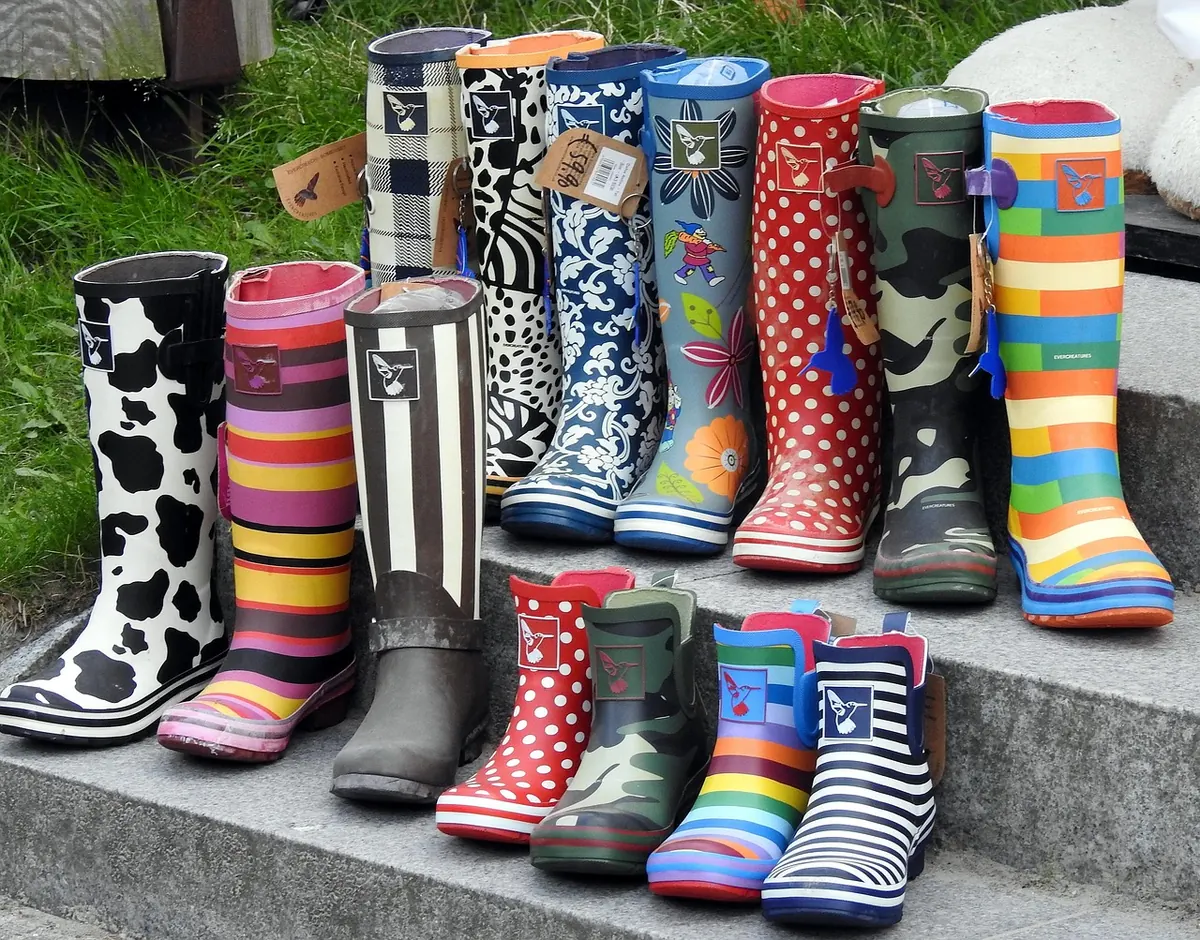
Photo: satynek / Pixabay