Brands

The UK-Made Wellington Boot Brands Worth Knowing
Wellington boots have an odd quirk in Britain: the name on the boot is rarely the place the boot was made. Hunter's green wellington began life in Edinburgh, Barbour's rubber sits on shelves beside waxed cotton from Northumberland, and both are now produced well beyond these shores. Meanwhile a small number of British workshops and brands still sell boots made here — and several more are refreshingly honest about designing here and manufacturing elsewhere. Knowing the difference before you pay is worth ten minutes of reading.
What "made in Britain" actually means on a wellington
"British brand" tells you where a company is registered, where the design work happens and where the marketing comes from. "Made in Britain" is a claim about the factory. They are not the same thing, and rubber boots are one of the categories where the gap is widest.
Country-of-origin claims are covered by trading standards guidance, and wording on a label has to be accurate. But there is room for phrases like "designed in Britain", "British heritage" and "country style", none of which commit anyone to a British factory. The reliable test is dull: look for the country of origin moulded into the sole or printed inside the shaft. If you cannot find it, email the brand and ask which factory makes that specific model. A company that knows its supply chain answers in a sentence. One that does not answers in a paragraph.
Heritage names, and where they stand now
Hunter is the name most people reach for first. The North British Rubber Company started in Edinburgh in 1856, and the original green wellington became standard issue for anyone standing in British mud. The brand is now global and its rubber boots are manufactured overseas; the shape and the colour are still the reference point for the whole category.
The Dunlop name carries similar weight, coming out of the same era of British rubber manufacturing, but Dunlop protective footwear is now made in mainland Europe. Barbour, founded in South Shields in 1894, is a genuine British country brand, though its wellingtons are produced by partner factories abroad.
That is not a scandal. Rubber footwear needs volume, moulds and specialist plant, and most of it now sits in Portugal, the Netherlands and Asia. It does mean that if what you want is a British-made boot, a famous British name will not get you there. It is also worth being clear about the neighbours: Le Chameau and Aigle are French, Tretorn is Swedish, Bekina is Belgian. Excellent boots, none of them British.
Smaller British makers worth knowing
Genuinely UK-made rubber wellingtons are scarce, and they tend to come from small operations rather than household names: rubber and agricultural suppliers making boots to order, plus brands that sell direct and will tell you plainly where a model is pressed. Gumleaf sells wellingtons and waterproof country clothing in Britain. Welligogs and Hoggs of Fife are British country names with wellingtons in the range. In each case, ask which models are actually made in the UK rather than letting the flag on the homepage settle it.
For leather the picture is brighter. William Lennon and Co in Derbyshire still makes boots in its own workshop; those are leather field boots rather than rubber wellingtons, but they are a genuine UK-made option for wet ground. A useful shortcut is your local agricultural merchant. They sell to people who stand in water for a living, and they usually know which brands are repairable, who makes them and who locally can close a split.
Materials: what you are paying for
Most wellingtons are made from one of four things, and the material tells you more than the label does.
- Natural rubber — flexible, grippy, comfortable, and the only common material that repairs well. Heavier than the alternatives, and it degrades in sunlight, ozone and contact with oils and manure.
- PVC — cheaper and stiffer. Cold makes it brittle, grip is poorer and splits are hard to fix. Acceptable for light garden use, frustrating in a wet field.
- Neoprene-lined rubber — warm in frost, which is worth paying for if you feel the cold. Heavier, and slower to dry inside.
- EVA and foam — very light with thin soles. Fine for festivals and short walks; they will not survive a winter of real mud.
Look at the sole too. A deep, open tread clears mud as you walk; a shallow fashion sole clogs in ten yards and stays clogged. Half sizes are rare, so try boots on with the socks you actually wear, and consider a removable insole to fine-tune the fit.
Checking a pair before you buy
- Find the country of origin on the sole or inside the shaft. If it is missing, ask which factory makes that model.
- Ask directly: "Which of your wellingtons are manufactured in the UK?" Vague answers are answers.
- Inspect the join between sole and upper. It should be even and clean, with no tacky residue.
- Flex the boot at the ball of the foot. Rubber creases; PVC cracks and whitens.
- Press a fingernail into the tread. Soft and shallow means a garden boot; firm and deep means a working boot.
- Check heel hold. A heel that lifts as you walk will rub within a mile.
- Ask about spares — insoles, buckles, linings — before you need them.
Repair, care and a second winter
Wellies fail in three places: splits at the flex point behind the toes, sole separation, and worn linings. Two of those are fixable.
Rinse mud and manure off after every use; both shorten rubber life. Dry boots upright, away from radiators and hot cars, and never store them folded or crushed.
For a small split, wash the area with warm soapy water and let it dry completely — damp rubber will not hold a patch. Roughen the surface, apply vulcanising cement from a bicycle puncture kit or boot repair kit, let it go tacky, press a rubber patch on, weight it and leave it overnight. Superglue alone is a poor choice on a flexing area; it sets hard and cracks away. If the sole has come away at the toe, ring a cobbler who handles rubber boots before you bin them and ask whether they can bond or stitch a new sole. Many can, if the upper is sound.
Worn linings and missing buckles are worth chasing through the brand or a saddler. If a boot is genuinely finished, keep the pair for the garden or a planter by the back door.
Buy the pair that suits your ground and your socks, ask where it was made, and look after it. A well-kept boot lasts several seasons longer than its price suggests — and if you want the label to match the landscape, ask the question before you pay, not after.
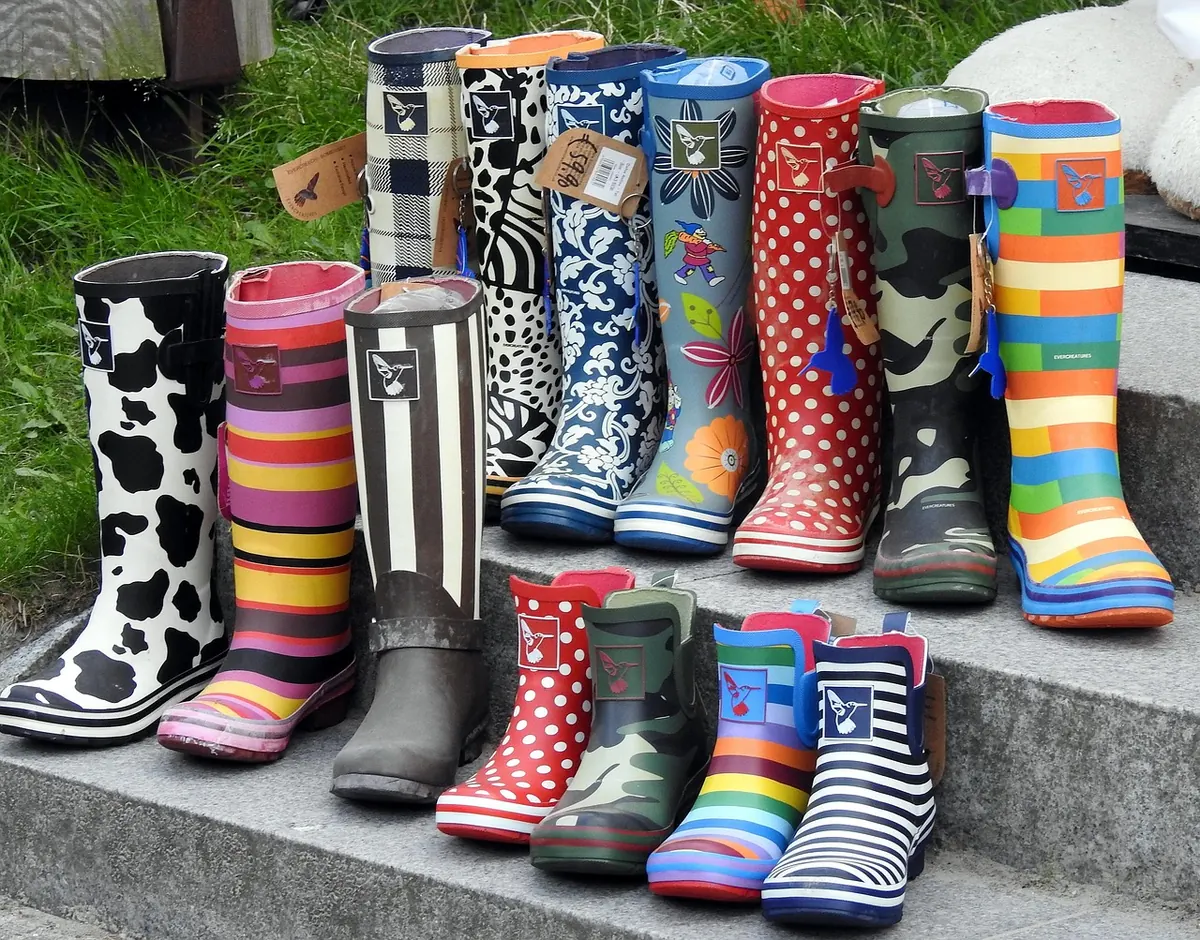
Photo: 652234 / Pixabay